.svg)

10+%
Increase in Cash Flow




Our integrated solution brings together robust data, intelligent claim handling & performance consulting for a richer revenue cycle.

Patient-Pay
Implement a combination of modern day technologies and strategies to collect patient payments faster.

AR & Denial Management
Start recovering revenue with our proprietary denial resolution system. We handle the appeals and track the trends that can prevent future denials.

Clinical Coding
Identify risks, shorten the revenue cycle, and drive improvements with clinical documentation education.

HealthCare Analytics
Leverage data to dig deeper to analyze KPIs, drive operational efficiencies and identify new revenue opportunities.

Professional Services
From medical coding consulting to eClinicalWorks optimization, our experts drive operational efficiencies across the revenue cycle.







In a time where nearly every revenue cycle vendor is touting automation, we're touting what works. Unlike other RCM solutions, Revele is different. Our time tested solution withstands the constant changes of payment models, policies, and payers and delivers a guaranteed 10% increase in cash flow*
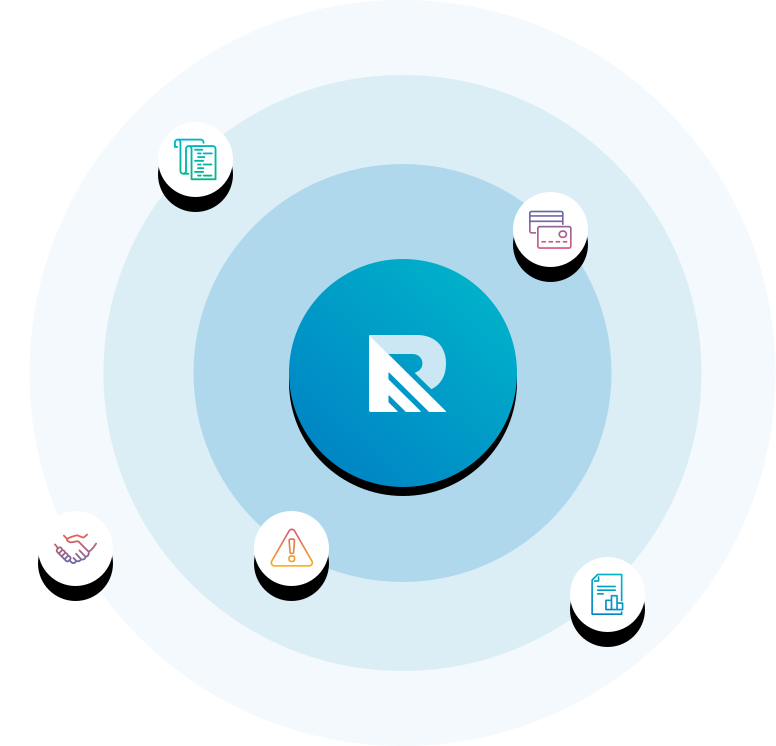
Patient-Pay
Implement a combination of modern day technologies and strategies to collect patient payments faster.
AR & Denial Management
Start recovering revenue with our proprietary denial resolution system. We handle the appeals and track the trends that can prevent future denials.
Clinical Coding
Identify risks, shorten the revenue cycle, and drive improvements with clinical documentation education.
HealthCare Analytics
Leverage data to dig deeper to analyze KPIs, drive operational efficiencies and identify new revenue opportunities.
Professional Services
From medical coding consulting to eClinicalWorks optimization, our experts drive operational efficiencies across the revenue cycle.
Revele integrates with revenue cycles powered by some of the greatest EHR platforms on the market. Whether you’re aiming to increase collections and profits, gain control of your revenue cycle or save time on administrative tasks, Revele is here to take on the mundane and provide the expert guidance you need to become a healthcare hero.
We're proud to partner with healthcare leaders committed to shaping the future of care delivery. Learn how we're creating reliable revenue with an end-to-end RCM solution.


We’re entrepreneurs at heart and today, we rely on the Entrepreneurial Operating System (EOS) to run our business. Inspired by change, we commit to improving ourselves and our services so that we can create more value for our customers. We believe by doing so, we can build happier and healthier communities that improve the quality of life globally.


Schedule a meeting with us. Our experts are here to understand your challenges and goals so we can identify the right solution —even if it doesn’t involve Revele.

Let our training and implementation teams take over. We create the strategy, configure the systems, and deliver the solution in your EHR - seamlessly.

Healthcare is changing. Our Client Success Teams exist to provide long term planning and consulting that differentiates your business.